


Synopsis
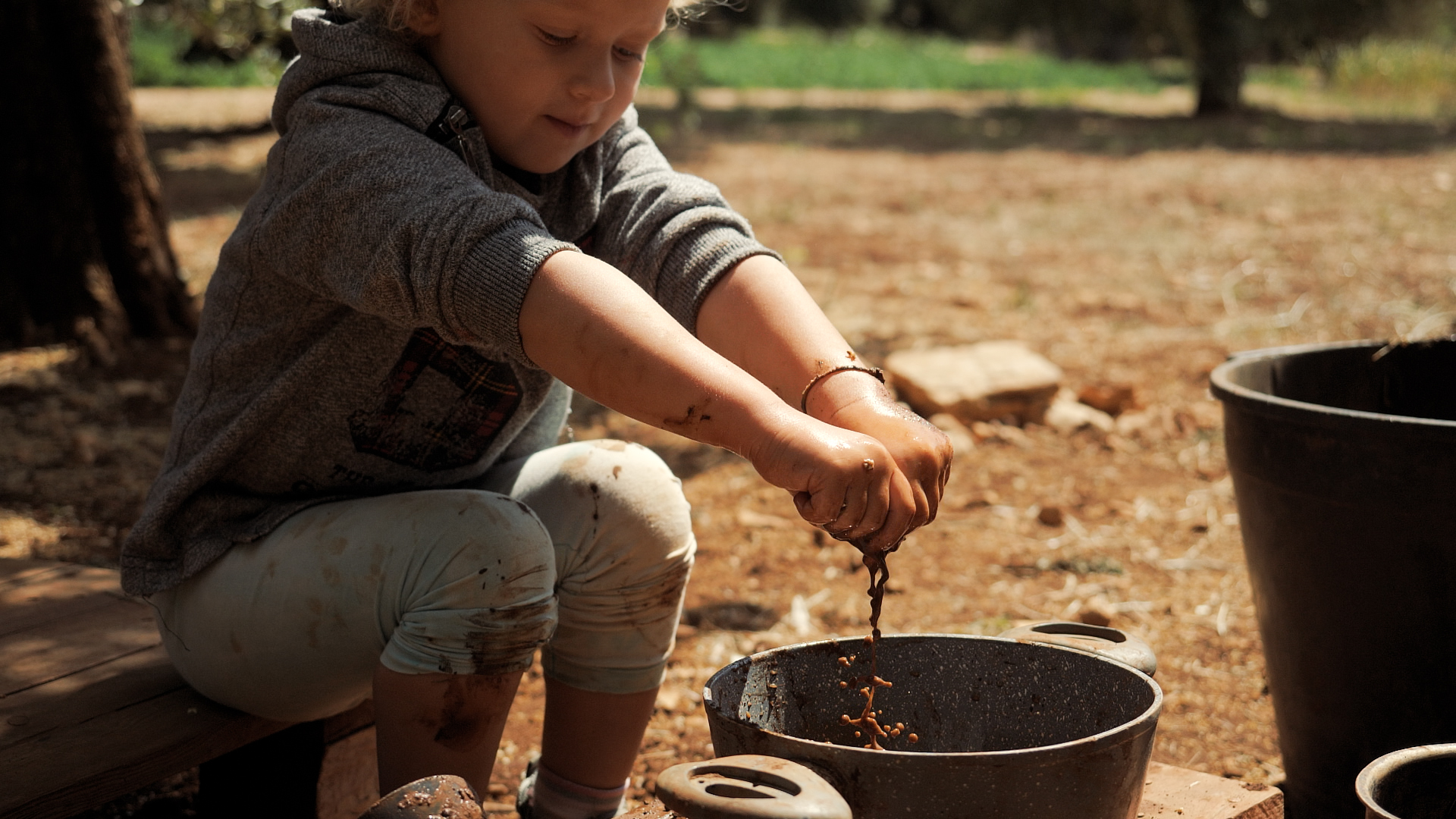
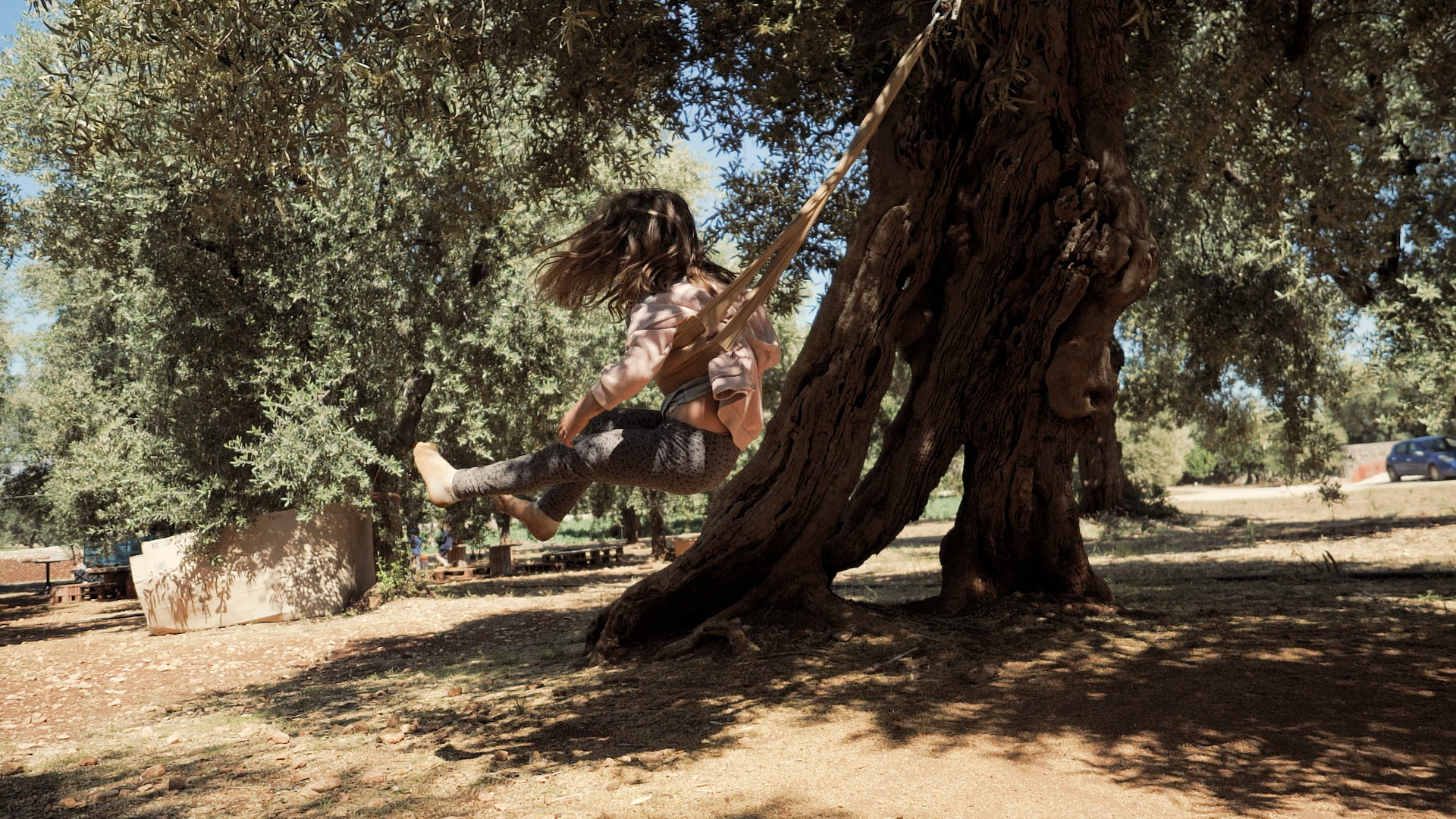
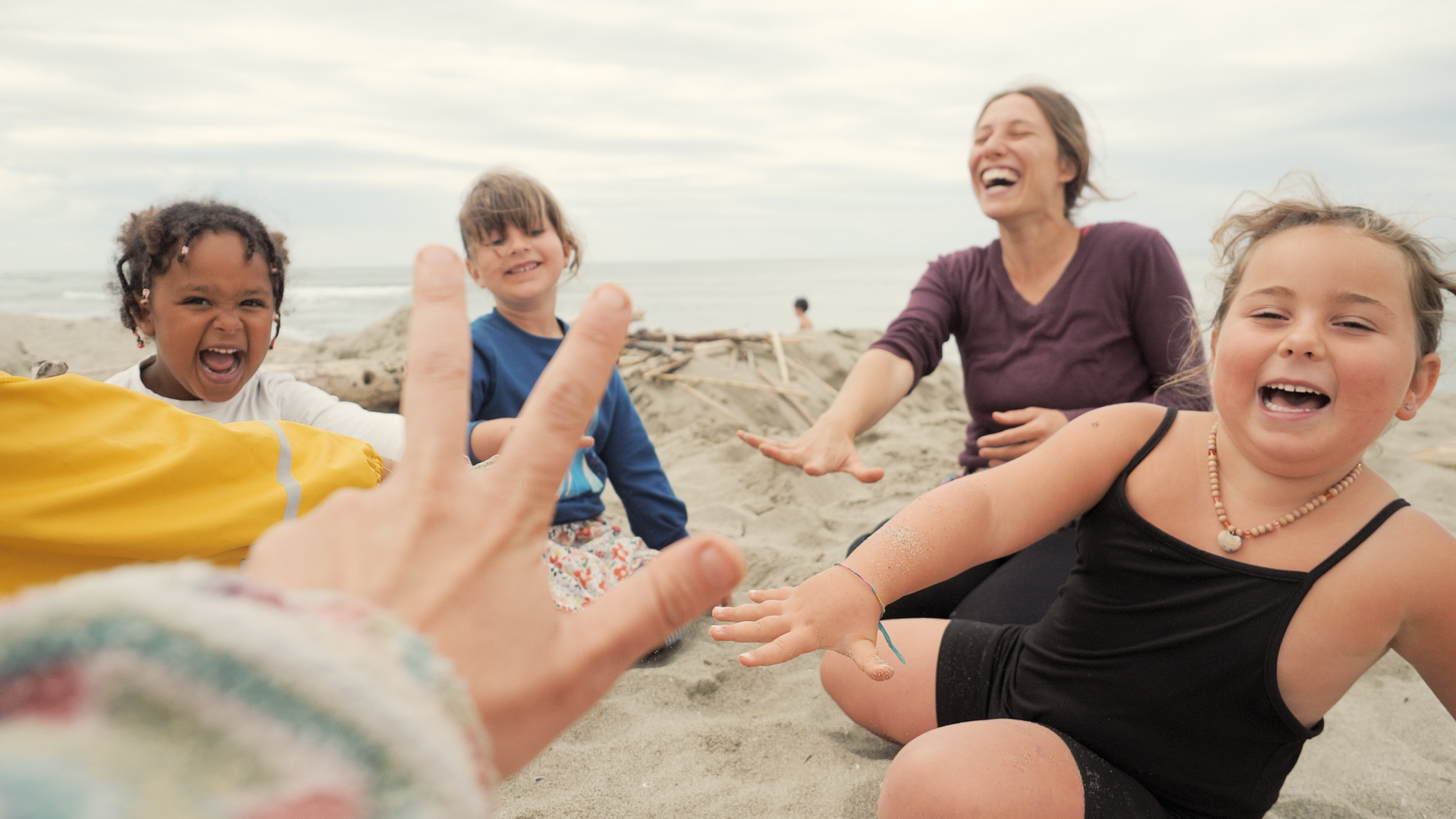
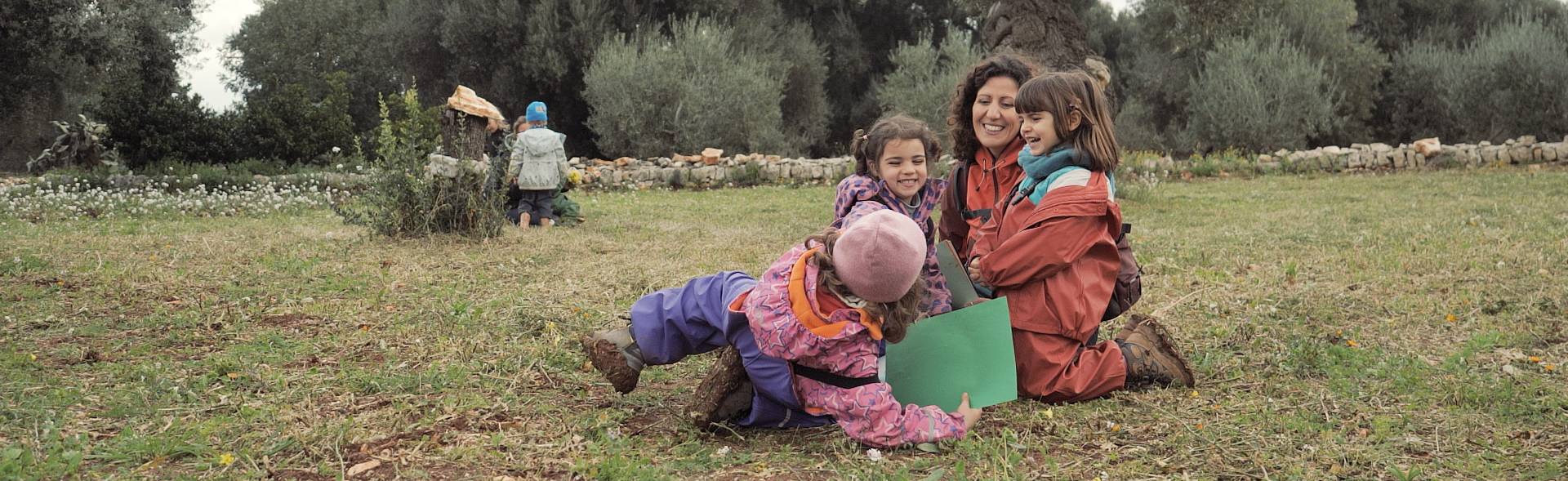
Every morning, Rebecca, Eva, Noah and Dynal say goodbye to their mum or dad, with their water bottles, snacks and still-warm lunches in their backpacks. Their classroom is a deserted beach full of tree trunks, an olive grove laden with flowers and rope crossings, or a young forest inhabited by dragonflies and rabbits in the Po Valley. With their hands, they make mud soup or search for treasures brought in by the sea, swinging in hammocks to escape the lava. Their day has no set schedule; the schedule emerges and flows with their experiences. Emma, Leo, Matteo and Maya love to be barefoot and feel the earth beneath their feet. We know nothing about them: how old they are, where they live, whether they have brothers or sisters.
This film does not seek to tell their stories or describe their lives. COME QUANDO FUORI PUOI: brief fragments of life to show another way of living. Of experiencing relationships and letting them live. Everything is related, everything IS relationship. Us, our bodies, our thoughts, our knowledge.
Rebecca is in the woods with Sofia and Nilde. Mariagrazia has accompanied them. A beautiful house with holm oak branches, a bed to lie down and sleep together, breakfast in the morning and horse riding in the afternoon. Life flows peacefully until Rebecca disagrees with a choice made by her companions. She wants Mariagrazia to be a dog, not a crocodile. And then everything changes: there are now two houses.
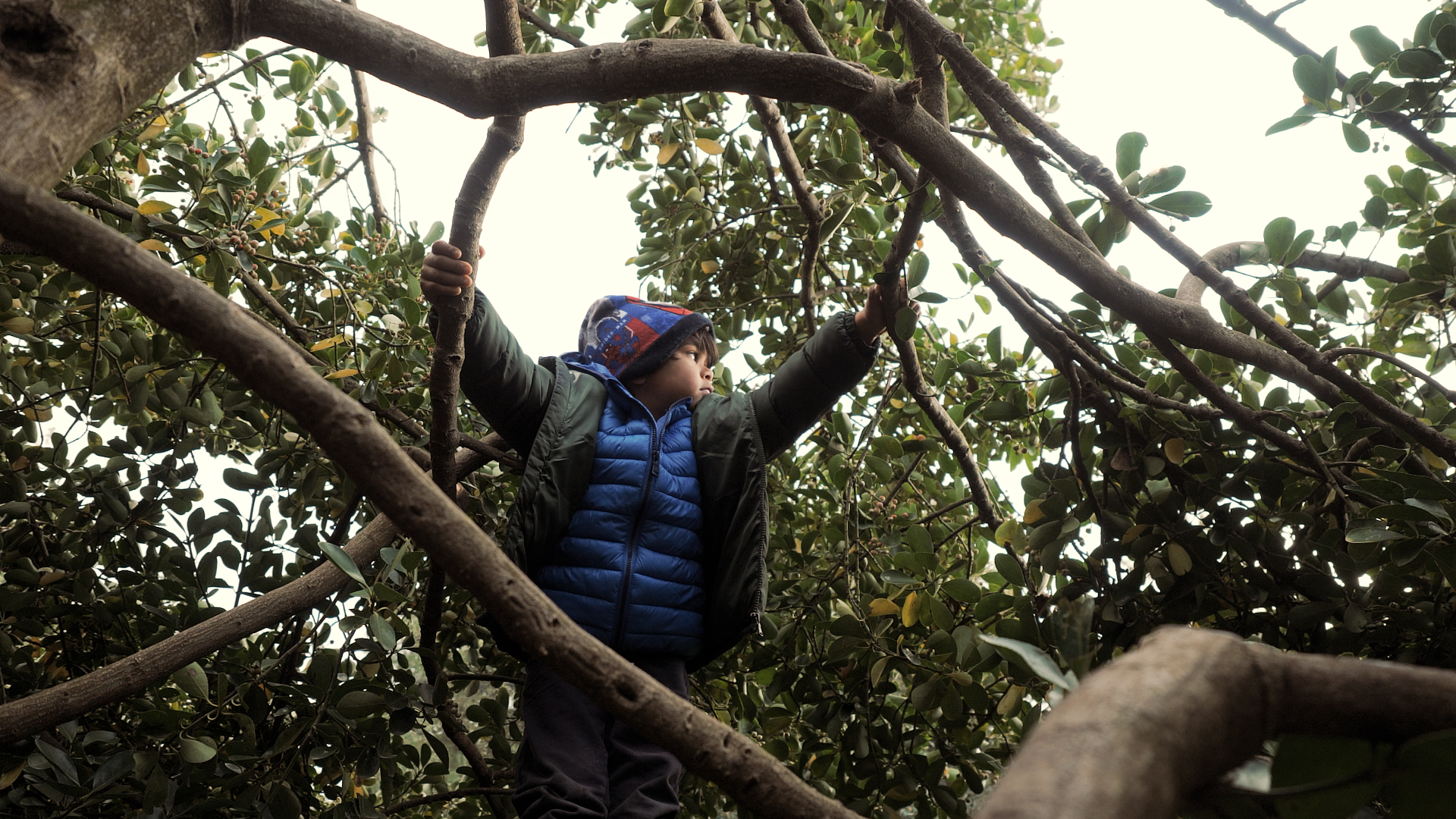
We are in a public garden surrounded by a wall about three metres high. Eva wants to climb that wall like Luna. She tries to climb a small gate, attempting the route taken by her friend, but she cannot do it. She can't do it. She cries, frustrated, and asks Sharon, who is next to her, for help. Sharon is willing to help her, to find another way that will allow her to climb up and down independently. If she were helped to climb up, would she feel safe once she was up there? Eva sees some chairs and tries to stack them.
Dynal wants to be in charge with Ariele. The two companions decide they want to wake up the robot Lucilla. Dynal wants to put in the batteries to activate the machine, but Ariele, with his power of speed, puts in all the batteries and completes the operation. Lucilla wakes up.
These are just brief hints of the stories we will see in the film. How will they evolve, what will happen? What will Mariagrazia, Sharon and Lucilla do? What will they say? They are silent and supportive presences for the children playing outside. We are not interested in the result, but in the process, the transformations; seeing what life can be like at that age.
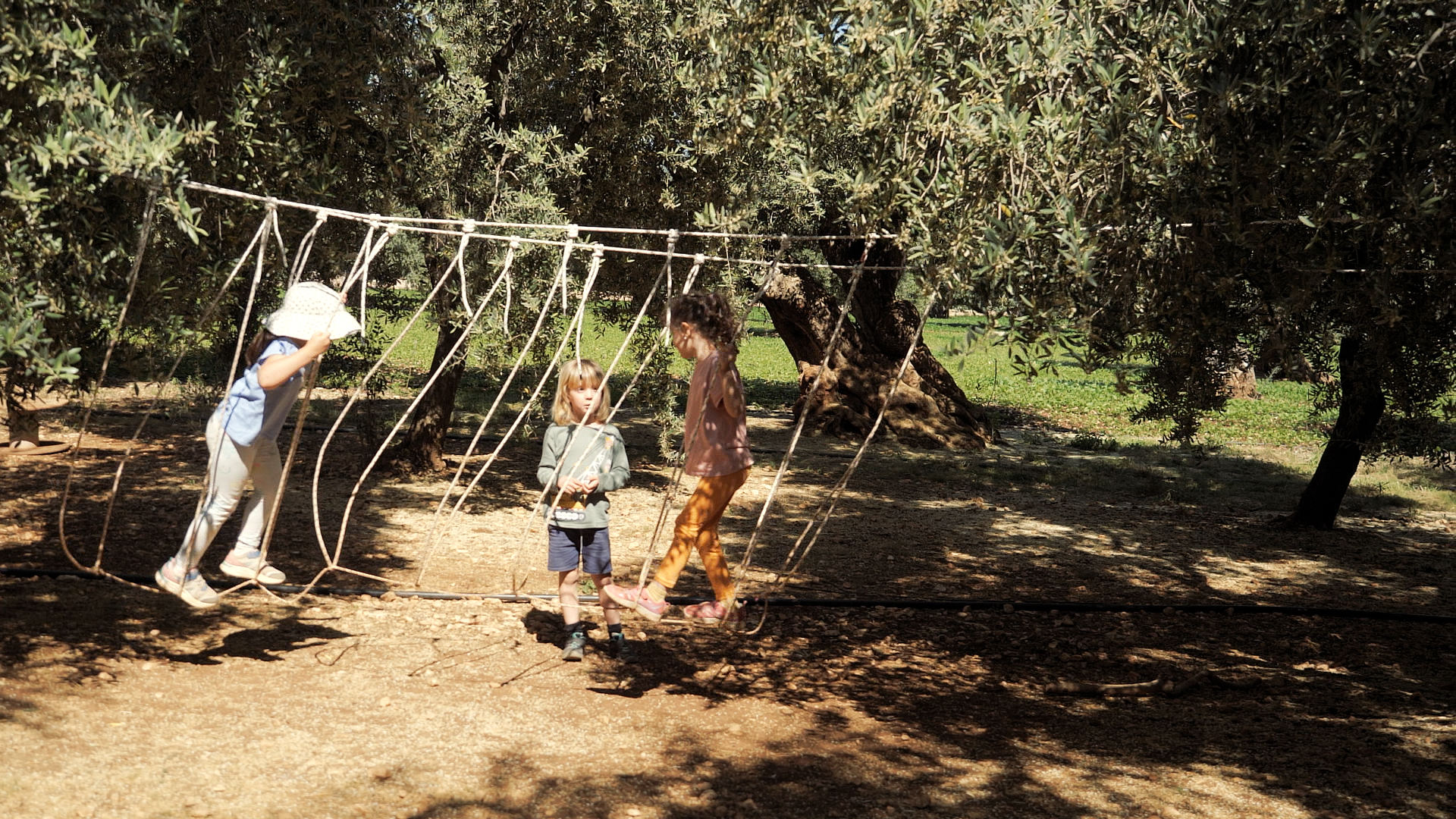
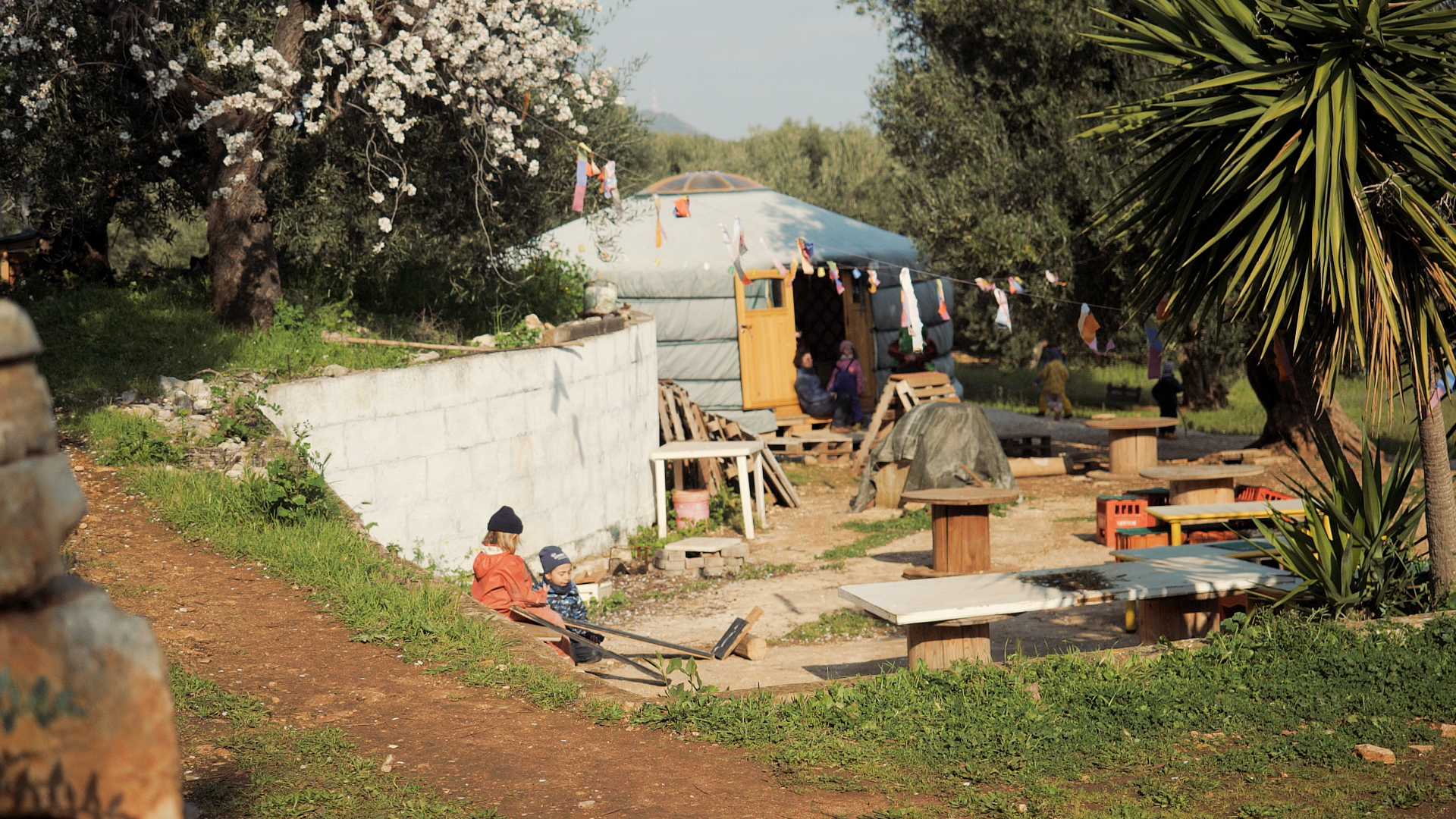
Century-old olive trees, rope bridges, sand dunes, low walls, hammocks, rooms and shelters: places crossed, places lived in, places imagined. The environment is also a protagonist in the relationship, in the story; because, however silent it may be, it is what makes these stories possible. An outside that is not just a space passed through but becomes a quality of action, an opening up of possibilities, a welcoming of emotional flows, an accompaniment to life. The adult does not position himself as a guide, but as a stable and present support. Thus, the film directs our eyes, ears and hearts towards the little people, their experiences and their thoughts. A journey into childhood to rediscover it, to give it new meaning; a journey to rediscover other possibilities for ourselves.